Youth marketing for banks and fintech in India works when it teaches before it sells, stays inside the rules for financial promotions and earns trust through safety and clarity rather than rewards. The audience is 16 to 25 year olds opening a first account, making a first UPI payment, saving for the first time or thinking about a first credit line, and they carry a strong sense of what scams look like. This guide is part of our youth marketing section. Nothing here is legal advice: always confirm with your compliance and legal teams before running any financial promotion.
Our fintech campus marketing page covers the on-campus view of this category. This article looks across channels and across the whole 16 to 25 range, including first-jobbers.
The audience is three audiences
A single “youth” message fails in finance, because the three age groups have different legal status and different needs.
| Segment | Age and status | What they need | Constraint for the brand |
|---|---|---|---|
| Teens | 16 to 17, school or junior college | Pocket money handling, a safe first payment tool, parent-linked access | Minors: consent, guardian involvement, product eligibility rules |
| Students | 18 to 22, UG and PG | First own account, UPI for splitting bills, small savings, perhaps a first card | Limited income, often a parent’s money, thin or no credit history |
| First-jobbers | 21 to 25 | Salary account, investing, insurance, credit cards | Real income, more eligibility, more regulated products |
For context, the audience is large: India has about 377 million Gen Z consumers, with direct spending of about $860 billion today (Snap Inc. and BCG, “The $2 trillion opportunity”, 2023). Student numbers are also big, with about 4.33 crore enrolled in higher education (AISHE 2021-22, Ministry of Education). Gen Z attitudes to money are covered in our Gen Z marketing hub.
What the rules mean for the marketing plan
Financial promotions in India sit under several overlapping rules. This is a pointer, not advice: your compliance team should interpret them for your licence and product.
- ASCI. The Advertising Standards Council of India has general rules against misleading claims, and its influencer guidelines require clear disclosure such as #ad or #collab on paid or barter posts, including by student creators and ambassadors. See ASCI for the current code.
- SEBI. Securities and mutual fund promotions are regulated by SEBI. Regulated entities face limits on who can give investment advice in their name, so a creator who says “buy this stock” or promises returns creates risk for the brand. Check SEBI’s current circulars on influencers and advertising.
- RBI. Banks, NBFCs and payment apps follow RBI rules on KYC, digital lending, customer disclosure and grievance handling. Account opening, minors’ accounts and credit eligibility rules differ by product.
- Minors and data. Collecting a teenager’s data or sign-up needs parental consent and a clear policy. Ask your legal team about current data protection obligations before a campus sign-up drive.
Practical consequences: an ambassador or creator can explain, demonstrate and share a referral code, but should not give personal financial advice, quote returns or approve eligibility. All claims go through compliance before they go to the student, and the brief says so in plain words.
First accounts and UPI
For banks and payment apps, the first account is the entry point. The moment that matters is the first week at college or the first job, when someone needs an account of their own.
What works:
- Simple explanations in the student’s language. A one-minute video on opening an account, with visible fees and requirements, performs better than a promotional offer.
- Peer-led demonstrations. An ambassador who shows a friend how to split a bill or pay the mess fee through UPI is believable. Our app user acquisition work uses college-level codes so we can see which campuses install and stay active.
- Hostel and canteen moments. UPI wins where cash used to: canteens, stationery shops, fests and photocopy centres. Placing a QR code and a short onboarding help-desk at a fest is more effective than a banner.
- Safe-use education. A campaign on spotting fake payment links and screenshots earns trust and sits close to the product.
Rewards need care. Cash-back for installs brings installs, but it also brings people who leave after the reward and, in some cases, referral abuse. When we ran EatSure’s youth acquisition with Campus50 referral codes, tracking by college showed which campuses produced the results (10K+ app installs, 30K+ unique signups, 40% ROI; case study). In finance, the equivalent is to measure activated and active accounts, not downloads.
Credit for students
Student credit is the most sensitive part of the category. A student with no income or credit history typically cannot get a standard credit card on their own, and products designed for them rely on guardian involvement, collateral or small limits. Eligibility and marketing rules vary by lender, so check them with your compliance team.
The honest approach is to market the habit, not the limit. Content about how credit works, what interest costs, what a missed payment does and how to build a history over time gets more trust than “get a card now” offers. Students and parents both react badly to anything that looks like pushing debt on a 19 year old.
Investing and savings
Mutual funds, SIPs and stock apps are growing among first-jobbers and some students. The pattern that works is education: short explainers on what an SIP is, how risk works and why to start small. The pattern that creates trouble is a creator showing profits or picking stocks. Follow SEBI’s rules on who can advise and on how past performance is shown, and stay away from return promises.
What wins trust
| Trust factor | What it looks like in practice |
|---|---|
| Plain fees | Charges shown before sign-up, not buried in terms |
| Safety | Clear steps for fraud, a visible grievance route |
| Peers who understand | Finance club presidents, commerce seniors, creators who explain rather than sell |
| Parent-friendly | Messages that a parent can read and not be alarmed by |
| Consistency | The campus promise matches what the app or branch does |
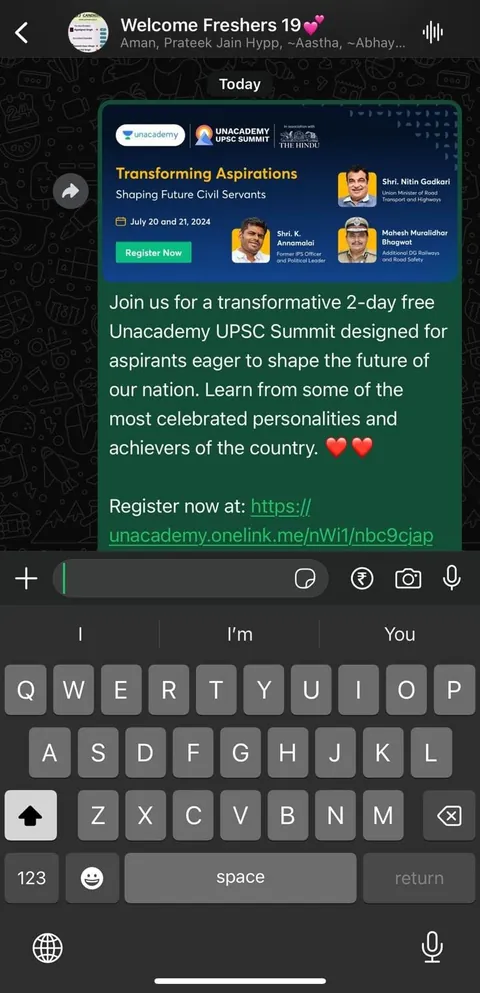
Campus finance clubs and commerce societies are useful partners. A guest session on “your first salary” or “UPI safety”, co-hosted with a society, can outperform paid reach. Our youth outreach programs team builds these sessions. When we ran Unacademy’s UPSC Summit as pan-India campus outreach across 100+ colleges in 10+ cities, it produced 8.5K+ registrations in a week (case study); the same outreach logic can carry a finance workshop.
A hypothetical plan
For example, a payments app wanting activated accounts among first-year students and first-jobbers in Bangalore. This is an illustration, not a past result, and it assumes compliance has cleared all claims.
| Phase | Action | Indicative spend |
|---|---|---|
| Weeks 1 to 2 | Compliance sign-off on claims; recruit 15 ambassadors and 5 finance-club partners across 12 colleges | ₹40,000 |
| Weeks 3 to 6 | Safety and “first UPI” explainers by 6 creators; fest QR help-desks; college codes | ₹2,20,000 |
| Weeks 7 to 10 | Society workshops on money basics; track activated accounts by college | ₹1,10,000 |
| Total | Single-city programme | About ₹3.7 lakh before GST |
This sits between our single-city starting point (from ₹2 lakh) and our multi-city band (₹5 to 15 lakh). For the city, see Bangalore campus marketing.
Trade-offs
- Slower approvals. Compliance review adds days to every piece of content. Build it into the timeline.
- Less creative freedom. Creators cannot improvise claims, which can make content less natural. Give them a short “can say, cannot say” list.
- Quality over volume. Fewer, better-activated accounts beat a large number of dormant ones.
- Reputation risk. A scam using your brand name spreads quickly in WhatsApp groups. Monitor and respond.
For a plan built with your compliance team, contact our youth marketing agency team through contact. We reply within 2 working hours.
Questions people ask
How do banks market to students in India?
By offering simple first accounts, education-led content and campus presence through finance clubs, creators and ambassadors, within RBI and ASCI rules. The best results come from explaining fees and safety clearly, not from heavy rewards. Check all promotions with compliance first.
Can student ambassadors promote financial products?
They can explain a product, show how it works and share an approved referral code, with a clear disclosure. They should not give personal financial advice, quote returns or confirm eligibility. Your brief should list exactly what they can and cannot say. This is not legal advice, so confirm with your legal team.
Can fintech brands use influencers to promote investing?
With caution. SEBI has rules on who can give investment advice and on promotion by regulated entities, and ASCI requires disclosure on paid posts. Education about how investing works is lower risk than tips or return claims. Check SEBI’s latest circulars and take legal advice.
What is the best way to get students to use a UPI app?
Win the everyday moment: canteen payments, splitting bills, mess fees and fests. A peer demonstration plus a college-level referral code works better than an ad. Measure active use after the first week, not downloads, to see real adoption.
Are credit cards for students a good idea to promote?
It depends on the product and on the rules that apply to it. Standard cards need income, so student products usually involve guardians or small limits. Focus on teaching how credit works, avoid pushing debt and have compliance review every claim.
How much does youth marketing for a fintech brand cost?
A single-city programme with ambassadors, creators and a few campus activations can start from ₹2 lakh before GST, and multi-city programmes run ₹5 to 15 lakh. Add time and cost for compliance review of every asset.